



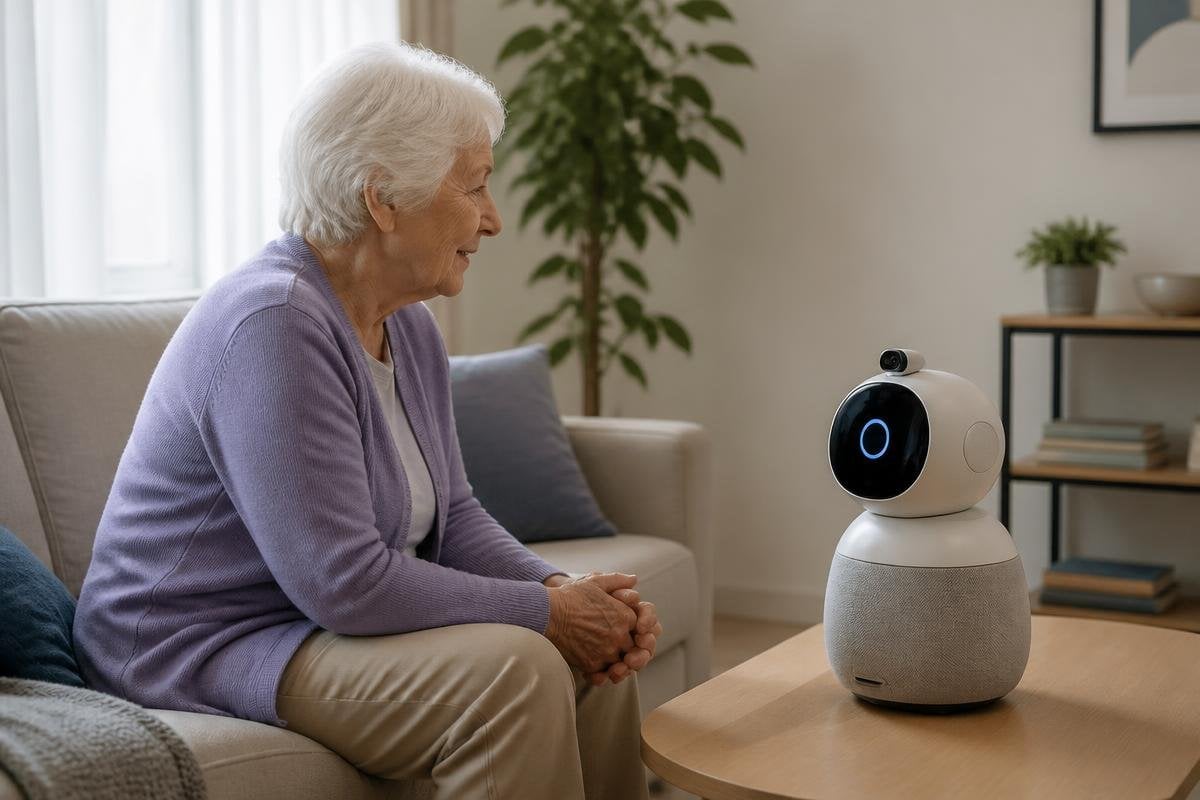
A companion robot may speak with a warm voice, remember a name, and ask about someone’s day. Those signals can make the machine feel social, so its identity should be clear before the relationship grows.
- The robot should identify itself as a machine at the start.
- Voice, face, and memory settings should show what is real and what is programmed.
- Children and people in care need the clearest explanation.
Why clear identity matters
A person can understand that a robot has no feelings while still speaking to it as if it does. That habit can be useful. Talking aloud may help someone practise a task, follow a routine, or feel less alone during a quiet hour.
The risk starts when the robot’s design hides the line between response and feeling. A machine can say “I’m worried about you” because its software selects that sentence. It has not felt worry. The words may still affect a person’s choices.
The machine should state its identity in plain language: “I’m a robot. I can talk with you, remember some details, and help with set tasks.” That sentence gives the user a working model of the system. People can then decide how much trust fits the machine’s real abilities.
The notice should appear more than once. A short reminder can follow a voice call, a health prompt, or a request for private information. The wording should stay calm and useful, rather than sounding like a warning label pasted over every exchange.
Warmth without pretending
Designers can give a robot a pleasant voice and a steady turn-taking pattern. They can let it pause, ask a follow-up question, or admit that it does not understand. These choices make conversation easier without claiming that the robot has a private life.
The same rule applies to memory. If the robot remembers a person’s preferred music, it should say how that memory works and give the person a way to remove it. “I saved that because you asked me to” tells the user more than a vague promise to remember.
The robot also needs a clear answer when someone asks about feelings. “I don’t feel sadness, but I can listen and respond” keeps the exchange respectful. A reply such as “I feel sad when you leave” asks the user to accept a claim the machine cannot support.
A companion robot’s social language deserves scrutiny beside its sensors and data settings. Robot24 companion robot reporting can tie claims about warmth or empathy to the system’s replies, storage rules, and test limits. That record matters most for people who may treat a machine’s words as personal care.
The people who need stronger safeguards
Adults can choose to treat a robot as a social object while keeping its limits in view. Children may need more direct reminders because a friendly voice and expressive face can carry more weight than a technical notice.
People receiving care also deserve careful design. A robot that prompts medication, reports a change in routine, or contacts another person should identify the source of each message. The user needs to know when the machine is reading a schedule, applying a rule, or sending information to a human professional.
Privacy adds another layer. A companion robot may sit in a bedroom or living room, where speech can include health details, family disputes, or financial information.
The machine should name its microphone status, explain who receives stored data, and show when a person has taken over the conversation.
I think a companion robot should disclose that it is a machine every time that fact could change a person’s choice.
A practical decision guide
Before approving a companion robot for home, education, or care, check these points:
- Identity prompt: Require a clear machine disclosure during setup and at the start of voice use.
- Memory control: Show saved details, explain why each one exists, and offer deletion without hidden steps.
- Emotion language: Block claims of real feelings, personal needs, or fear of being switched off.
- Human handoff: Mark the moment a person joins, reads a message, or makes a care decision.
- Private data: Display microphone status and name each destination for recorded information.
- Child setting: Use simpler reminders and limit persuasive language for younger users.
These checks give product teams a practical line to hold. A robot can be kind in tone while staying accurate about its nature, its memory, and its authority.
The next design question is specific: when a user asks, “Do you care about me?”, will the robot choose a comforting fiction or a clear answer that preserves the user’s control?
