



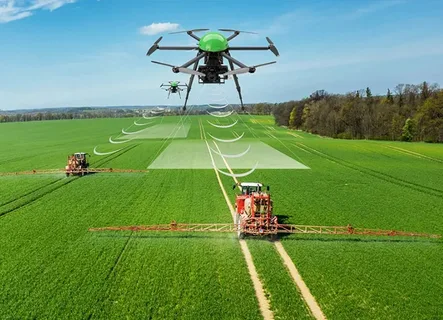
In recent years, precision agriculture has gained significant attention due to its ability to revolutionize farming practices. By harnessing advanced technologies, farmers are now able to monitor and manage their crops with unprecedented accuracy. One of the most pivotal technologies driving this revolution is the Internet of Things (IoT). IoT in precision agriculture allows farmers to collect real-time data, make informed decisions, and optimize resource use, leading to improved yields, reduced costs, and more sustainable farming practices. In this article, we’ll explore the role of IoT in advancing precision agriculture and how it is shaping the future of farming.
What is Precision Agriculture?
Precision agriculture refers to the use of technology to observe, measure, and respond to the variability found in fields. The goal is to optimize the use of resources, such as water, fertilizers, and pesticides, while increasing crop production and minimizing environmental impact. This concept integrates various technologies, including GPS, remote sensing, and IoT sensors, to achieve better management of agricultural practices.
IoT in Agriculture: A Game-Changer
The Internet of Things (IoT) connects physical devices, such as sensors, machines, and even animals, to the internet, enabling real-time data exchange and analysis. In agriculture, IoT plays a crucial role by providing continuous, up-to-the-minute insights into the farm environment, which helps farmers make better decisions for crop management.
IoT Sensors for Data Collection
One of the most significant contributions of IoT to precision agriculture is the deployment of sensors that monitor soil moisture, temperature, humidity, and nutrient levels. These sensors provide continuous data about the conditions of the crops and the environment. This data helps farmers understand the needs of their crops in real time, allowing them to adjust irrigation, fertilization, and pest control measures with high precision.
Real-Time Monitoring and Remote Control
IoT systems can send data directly to farmers’ smartphones or computers, enabling them to monitor their crops and field conditions remotely. This feature is particularly beneficial for large-scale farms, where it might be difficult for farmers to be present in all areas at once. Real-time monitoring not only saves time but also helps to detect potential issues, such as pests or water stress, before they become serious problems.
How IoT Drives Sustainability in Agriculture
One of the most compelling aspects of using IoT in precision agriculture is its ability to promote sustainability. By providing farmers with the data they need to optimize resource use, IoT helps reduce waste and conserve vital resources like water and fertilizer.
Efficient Water Management
Water scarcity is one of the most significant challenges faced by farmers worldwide. IoT-enabled soil moisture sensors provide accurate data on the moisture levels of the soil, allowing farmers to implement precise irrigation schedules. This not only prevents over-watering but also ensures that crops receive the right amount of water at the right time, leading to more efficient water use.
Reducing Chemical Use
IoT can also help in minimizing the use of fertilizers and pesticides. Through precise monitoring, farmers can apply chemicals only where and when they are needed, reducing excess use and minimizing environmental pollution. For instance, smart irrigation systems combined with IoT sensors can ensure that fertilizers are delivered with irrigation water, maximizing the absorption rate and minimizing waste.
Benefits of IoT in Precision Agriculture
The integration of IoT technology into agriculture is a game-changer. The benefits of IoT in precision agriculture are numerous and far-reaching:
- Increased Yields: By optimizing the use of resources and ensuring crops receive what they need when they need it, IoT contributes to higher crop yields.
- Cost Efficiency: IoT helps farmers reduce costs by minimizing the waste of resources, such as water, fertilizers, and labor.
- Enhanced Decision-Making: With real-time data at their fingertips, farmers can make informed decisions quickly, leading to better management practices.
- Sustainability: IoT enables more sustainable farming practices by conserving natural resources and reducing environmental impact.
- Reduced Environmental Impact: IoT helps reduce runoff from fertilizers and pesticides, which can harm local ecosystems.
The Future of IoT in Precision Agriculture
As technology continues to evolve, the role of IoT in precision agriculture is only set to expand. The integration of AI, machine learning, and big data analytics with IoT systems will provide farmers with even more powerful tools to improve farm management. In the near future, we can expect to see autonomous drones for crop monitoring, automated machinery for planting and harvesting, and more sophisticated predictive models for crop growth and yield forecasting.
Moreover, as IoT devices become more affordable and accessible, smaller-scale farmers will also benefit from these technologies, making precision agriculture a more inclusive solution for global food security.
Conclusion
The role of IoT in advancing precision agriculture is pivotal to the future of farming. By enabling real-time monitoring, data-driven decision-making, and resource optimization, IoT is transforming the agricultural landscape. With its numerous benefits, including increased yields, cost savings, and environmental sustainability, IoT is helping farmers overcome some of the biggest challenges in agriculture today.
